

This guide will help you plan a Towns and Food anchor day that actually delivers. No rushing between villages. No "we should have eaten there" regrets. Just the logistics, timing, and mindset that make a Villager day work.
THE MINDSET
What Makes a Villager Day Work
The mistake most people make: trying to hit three or four villages in one day. They spend more time in the car than in any actual town, and every stop feels rushed.
A Villager day works differently. You pick one village as your anchor. Maybe two if they're close. The goal is depth, not breadth.
That means you're not optimizing for variety. You're giving yourself permission to linger, to sit down for a real meal, to wander without checking the time. One great village beats three forgettable drive-throughs.
DOWNLOAD YOUR PLANNER
Use this planner to help map your ideal anchor day, choose stops, and keep planning simple.
Or keep reading below!
THE PLAN
Building Your Anchor
Pick one village, not three.
Look for a village that has enough to hold your attention for 3-4 hours. That usually means:
• A walkable center you can explore on foot
• At least one good place to eat (ideally with a view or atmosphere)
• A few shops or galleries worth browsing
• Something that makes it feel distinctly Vermont (a covered bridge, a green, a general store)
Know where you're eating before you go.
Food is the anchor of a Villager day. Don't leave it to chance. Before you go, identify:
• Your first choice for lunch (check hours and whether you need a reservation)
• A backup option in case the first is closed or packed
• A good coffee or treat spot for mid-afternoon
Nothing derails a Villager day faster than wandering around hungry, looking for somewhere that's open.
Build in time to do nothing.
A Villager day should include at least one moment where you're just sitting somewhere pleasant. That might be:
• A bench on the village green
• A cafe table where you're not rushing to leave
• A spot by the river or near a bridge
• The porch of a general store
If you never stop moving, you're sightseeing. If you sit and watch the village happen around you, you're actually there.
THE RHYTHM
BEFORE YOU GO
Practical Tips
✔ Check restaurant hours and days
Many Vermont spots close on Mondays. Some are dinner-only. Confirm before you build your day around a meal.
✔ Know where to park
Some villages have limited parking, especially on weekends. Arrive early or know where the overflow lots are.
✔ Bring cash
Some farm stands, small shops, and older establishments are cash-only. Have some on hand.
✔ Wear comfortable shoes
You'll be walking on uneven sidewalks, poking into shops, and strolling more than you expect. Skip the heels.
✔ Leave room in your bag
If you're the type to pick up cheese, maple syrup, or a bottle of something local, bring a cooler bag or tote.
WATCH OUT
Common Mistakes
① Trying to see too many villages
Every village you add means less time in each one. Two is the max. One is often better.
② Skipping lunch or grabbing something fast
For a Villager, the meal is part of the experience. A quick sandwich in the car undoes the whole vibe.
③ Arriving after noon
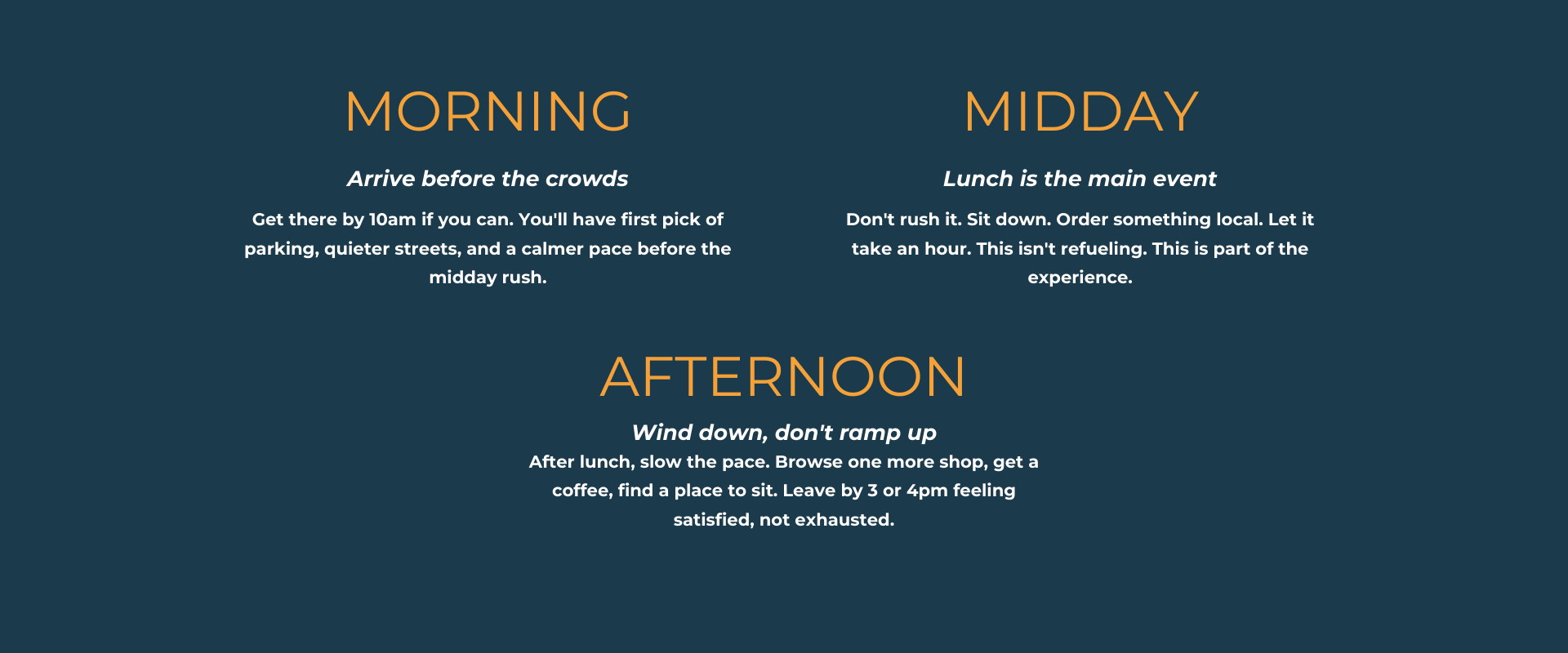
You'll hit the crowds, struggle for parking, and feel rushed before you even start. Morning arrival, always.
④ Filling every minute with activities
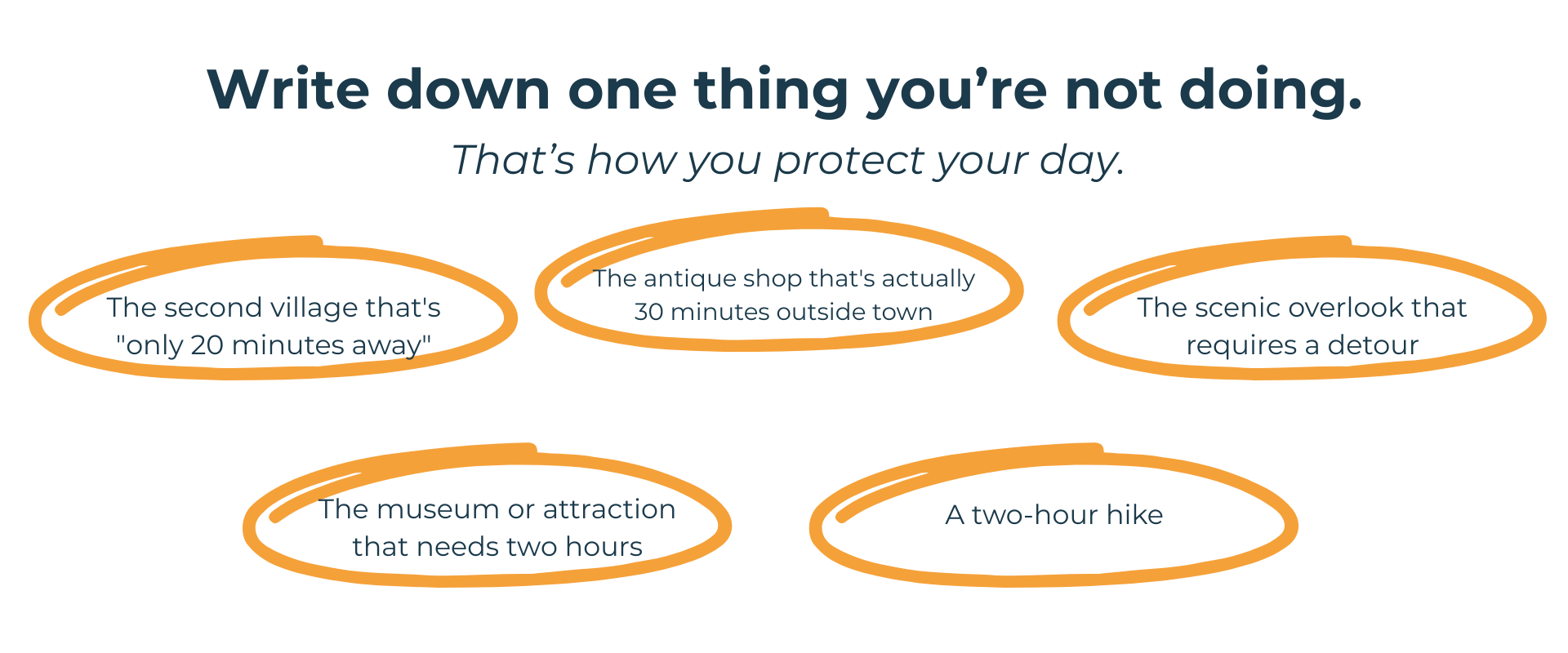
A Villager day needs slack. If you've scheduled a shop visit, a museum, a tasting, and two meals, you're sightseeing, not savoring.
PROTECT YOUR DAY
What to Skip
SKIP THE PLANNING
Want it fully handled?
If you'd rather not research restaurants, figure out parking, or wonder if you're missing the best spots, you can hand the whole day off.
Someone who knows which villages are worth your time and which are tourist traps
The lunch spots locals actually go to, not just the ones with good SEO
A day that flows because someone else handled the logistics
You show up and enjoy it instead of managing it