

This guide will help you plan an Outdoors-Forward anchor day that delivers without wrecking you. No getting lost on unmarked trails. No biting off more than you can chew. Just the logistics, timing, and mindset that make a Trekker day work.
THE MINDSET
What Makes a Trekker Day Work
The mistake most people make: picking a hike that's too ambitious, starting too late, or treating the trail as just one item on a longer checklist.
A Trekker day works differently. The hike or outdoor activity is the anchor. Everything else wraps around it, not the other way around.
That means you're not trying to squeeze a hike into a day already full of other plans. You're building the day around the trail. The reward is how you feel at the end: physically tired in a good way, clear-headed, and like you actually experienced Vermont instead of just looking at it.
DOWNLOAD YOUR PLANNER
Use this planner to help map your ideal anchor day, choose stops, and keep planning simple.
Or keep reading below!
THE PLAN
Building Your Anchor
Pick a trail that matches your reality.
Be honest about your fitness level and how much time you actually have. Consider:
• Distance (how far can you comfortably go?)
• Elevation gain (flat trail vs. steep climb changes everything)
• Trail conditions (rocky, muddy, well-maintained)
• Time on trail (a 4-mile hike can take 2 hours or 4 depending on terrain)
Know the trailhead logistics before you go.
Nothing ruins a Trekker day like showing up and not being able to start. Check:
• Parking (is there a lot? Does it fill up? Do you need to pay?)
• Access (is the road to the trailhead paved or dirt? Passable in your vehicle?)
• Signage (is the trail well-marked or do you need a map/GPS?)
• Facilities (are there restrooms at the trailhead?)
A quick search or a downloaded trail app can save you a lot of frustration.
Plan what comes after the trail.
A Trekker day shouldn't end the moment you get back to the car. Build in a reward:
• A meal somewhere nearby (you'll be hungry)
• A swimming spot to cool off (if it's summer)
• A scenic drive back that lets you decompress
• An ice cream or beer stop to celebrate
The post-hike wind-down is part of the experience. Don't skip it.
THE RHYTHM

BEFORE YOU GO
Practical Tips
✔ Check the weather the morning of
Mountain weather changes fast. Rain, fog, or unexpected heat can turn a great hike into a slog. Have a backup plan.
✔ Pack more water than you think you need
Dehydration sneaks up on you. Bring at least a liter per person for a moderate hike, more for longer or hotter days.
✔ Wear real hiking shoes
Vermont trails are rocky, rooty, and often muddy. Sneakers won't cut it. Ankle support matters.
✔ Bring bug spray and sunscreen
Blackflies in spring, mosquitoes in summer, sun exposure year-round. Be prepared.
✔ Download the trail map offline
Cell service is unreliable on most Vermont trails. Have the map on your phone before you leave service.
WATCH OUT
Common Mistakes
① Picking a hike that's too hard
A death march isn't a vacation. Pick something that challenges you without destroying you. You can always do a harder one next time.
② Starting too late
If you're hitting the trail at noon, you're fighting heat, crowds, and the clock. Morning starts make everything better.
③ Underestimating how long it takes
Trail times are estimates. Add 30% for photos, snacks, wrong turns, and just being on vacation. A "2-hour hike" often takes 3.
④ Stacking other activities on top of the hike
If you're planning a hike plus a village visit plus a scenic drive, something's getting rushed. Let the hike be the day.
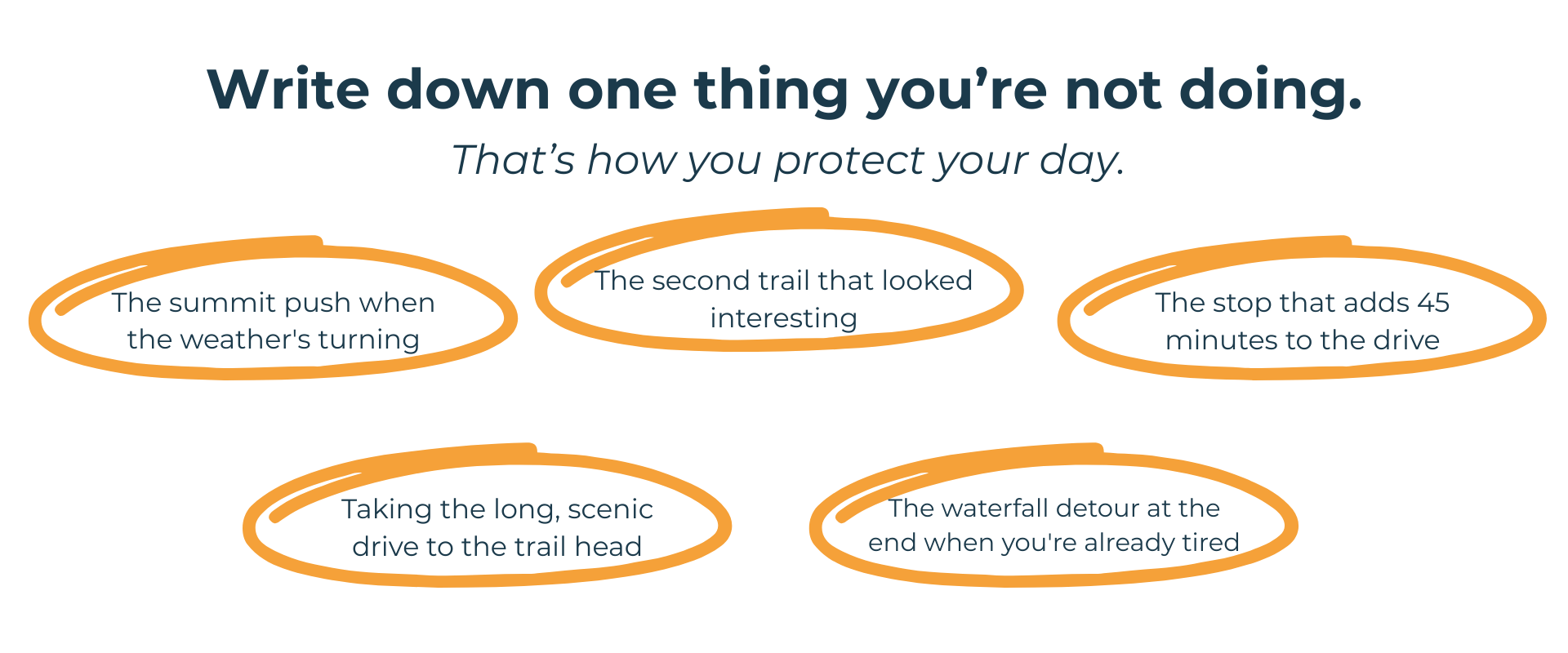
PROTECT YOUR DAY
What to Skip
SKIP THE PLANNING
Want it fully handled?
If you'd rather not research trails, worry about logistics, or wonder if you picked the right hike, you can hand the whole day off.
Someone who knows which trails match your fitness and deliver the best views
The trailheads locals use, not the overcrowded ones in every guidebook
A day that flows because someone else scouted the route
You focus on the hike instead of the planning